
What Causes Heavy Bleeding During Periods?
Heavy periods can be caused by hormonal imbalance, fibroids, polyps, adenomyosis or blood clotting problems. Finding the cause and treating it is important.

In this article 4 sections
The most common causes of heavy bleeding during periods are hormonal imbalance, fibroids or polyps in the womb, and adenomyosis. Thyroid problems, blood clotting disorders, some medicines or contraceptive methods and, depending on age, abnormal changes in the womb lining can also be responsible. Often no specific cause is found. In the video, Dr Sharmin Afroz explains this topic briefly. Read on to learn about the causes and when to be concerned.
01How much bleeding counts as ‘heavy’?
Every woman’s periods are different, so the key question is whether the bleeding is disrupting your normal life. The following signs suggest heavy menstrual bleeding (menorrhagia):
- Soaking a pad or cloth every one to two hours
- Having to get up at night to change pads, or leaking onto the bed
- Passing large blood clots
- Bleeding for more than seven days
- Weakness, tiredness, dizziness or breathlessness, which are signs of anaemia
- Having to miss school, work or going out because of bleeding
02Common causes of heavy bleeding
Hormonal imbalance
The hormones oestrogen and progesterone control how the womb lining builds up and sheds. If ovulation does not happen properly, this balance is upset and the lining can become thicker, leading to heavy bleeding. This is more common in the first few years after periods start, in the years before menopause and in PCOS.
Structural problems of the womb
- Fibroids: benign growths in the muscle of the womb, which can cause heavy bleeding depending on their position and size.
- Polyps: small growths in the womb lining, which can cause irregular or heavy bleeding.
- Adenomyosis: cells of the womb lining grow into the muscle of the womb, causing heavy, painful periods.
Other causes
- Thyroid hormone problems
- Bleeding disorders, especially if periods have been very heavy since they first started
- Blood-thinning medicines
- The first few months of using a copper IUD
- Pregnancy complications such as miscarriage, which can sometimes be mistaken for a heavy period
- Especially over the age of 45, abnormal thickening of the womb lining (endometrial hyperplasia) or, rarely, cancer, so assessment is important at this age
03How the cause is found
Your doctor will ask about your periods and examine you. Usually haemoglobin and other blood tests, a thyroid test, a pregnancy test and an ultrasound are done. If needed, a sample of the womb lining (endometrial biopsy) or a hysteroscopy may be arranged. Treatment is then chosen according to the cause, and may involve medicines, hormonal treatment or, if necessary, surgery. Do not start medicines on your own.
Before your appointment, keeping a record for a few months of when each period starts, how many days it lasts and how many pads you use per day helps your doctor find the cause.
When to see a doctor
Go to hospital without delay in any of these situations:
- Completely soaking a pad every hour for several hours
- Dizziness, feeling faint, a racing heart or breathlessness
- Heavy bleeding with severe lower abdominal pain when you could be pregnant
- Bleeding with fever or foul-smelling discharge
Also see a gynaecologist if you have repeated heavy periods, bleeding between periods or after sex, or any bleeding after menopause.
Q & A
Frequently asked questions
Passing small clots now and then can be normal. Repeatedly passing large clots is a sign of heavy bleeding and should be checked by a doctor.
Yes. Losing a lot of blood over time lowers iron levels and can cause anaemia, with weakness, tiredness and dizziness.
In the first few years after periods begin, hormones take time to settle. But if bleeding has been very heavy from the start, a clotting disorder should be checked for.
No. In many cases it can be controlled with medicines or hormonal treatment. Your doctor will choose treatment based on the cause.
Article & video by
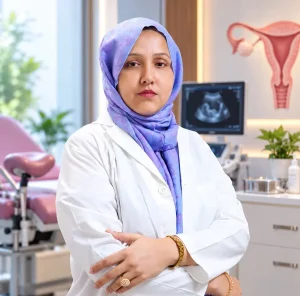
Dr. Sharmin Afroz
Obstetrics, Gynaecology & Infertility Specialist and Laparoscopic Surgeon
Assistant Professor, Department of Obstetrics & Gynaecology, Anwer Khan Modern Medical College & Hospital.