Removing Large Fibroids by Laparoscopy Without Losing the Womb
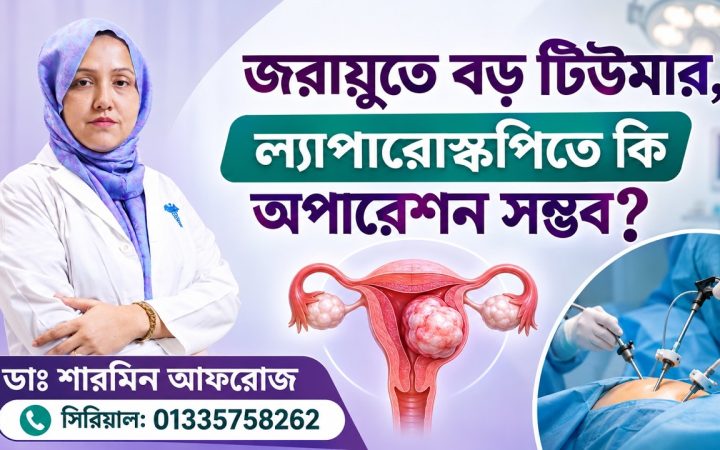
Removing fibroids while keeping the womb, called myomectomy, can often be done by laparoscopy, even for large tumours. This matters especially for women who want children.
In this article 6 sections
Yes, in many cases large uterine tumours can be removed by laparoscopy without removing the womb. These tumours are usually fibroids, and the operation to remove only the fibroids while keeping the womb is called myomectomy. It is an important option for women who want children in the future or who wish to keep their uterus. However, the doctor decides whether it is safe for you after assessing the size, number and position of the fibroids. In the video, Dr. Sharmin Afroz briefly explains this topic.
01How laparoscopic myomectomy is done
Under anaesthesia, a few small holes are made in the abdomen. A camera is passed through one, and fine instruments through the others are used to separate the fibroid from the wall of the womb while watching on a screen. The cut in the womb is then carefully stitched in several layers so that the uterus remains strong. The fibroid is brought out through a small opening and sent to the laboratory for testing. Some fibroids that bulge into the cavity of the womb can instead be removed by hysteroscopy, without any cut.
02Who is suitable
- Women who want to conceive in future or wish to keep their womb
- Women whose fibroids cause heavy periods, pain, pressure or difficulty conceiving
- Women whose fibroids are of a number, size and position suitable for laparoscopy
- Women with no suspicion of cancer
If fibroids are extremely large or very numerous, open myomectomy may sometimes be safer. Before surgery, an ultrasound or MRI and a blood count are done; anaemia is corrected first if necessary.
03Benefits and risks
Laparoscopy usually means less pain, smaller scars, a shorter hospital stay and a quicker return to work. The biggest benefit is that the womb and the ability to carry a pregnancy are preserved.
There are some risks, however:
- Bleeding during surgery, sometimes requiring a blood transfusion
- Infection or internal scar tissue (adhesions)
- Conversion to open surgery for safety if needed; very rarely, uncontrolled bleeding may make removal of the womb necessary
- New fibroids may grow over time
04Pregnancy after myomectomy
Many women conceive successfully after myomectomy. However, you are usually advised to wait several months for the uterine wound to heal; your doctor will tell you how long based on your operation. During pregnancy the old scar on the womb needs extra care, and in some cases a caesarean birth is recommended. So if you become pregnant, tell your doctor about your operation from the start.
05Recovery after surgery
After laparoscopic myomectomy, many women go home within a few days. Avoid heavy lifting and strenuous exercise for the first few weeks, eat nourishing food and follow your doctor’s advice if you are anaemic. Attend follow-up on time for an ultrasound and to discuss the laboratory report on the removed fibroids.
When to see a doctor
If you have fibroids and want to keep your womb, talk to an experienced gynaecologist and laparoscopic surgeon. After surgery, or during a pregnancy after myomectomy, go to hospital promptly if you have:
- Fever, or severe or worsening abdominal pain
- Heavy vaginal bleeding or foul-smelling discharge
- Dizziness, palpitations or feeling faint
- In pregnancy, sudden severe abdominal pain, bleeding or reduced baby movements
Q & A
Frequently asked questions
Yes. Myomectomy removes the existing fibroids, but new ones can grow later, so regular follow-up after surgery is important.
A wait of several months is usually advised, but the exact time depends on the operation and the uterine stitches. Your doctor will advise you.
It depends on how deep the cut in the womb was. In some cases a caesarean birth is recommended, so plan ahead with your doctor during pregnancy.
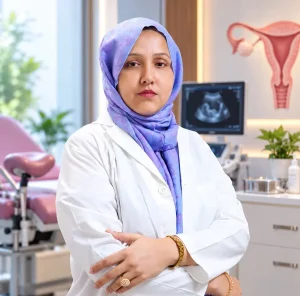
Article & video by
Dr. Sharmin Afroz
Obstetrics, Gynaecology & Infertility Specialist and Laparoscopic Surgeon
Assistant Professor, Department of Obstetrics & Gynaecology, Anwer Khan Modern Medical College & Hospital.